Decoding the Red Cylinder: A Facilities Manager's Guide to Extinguisher Labels and Service Tags
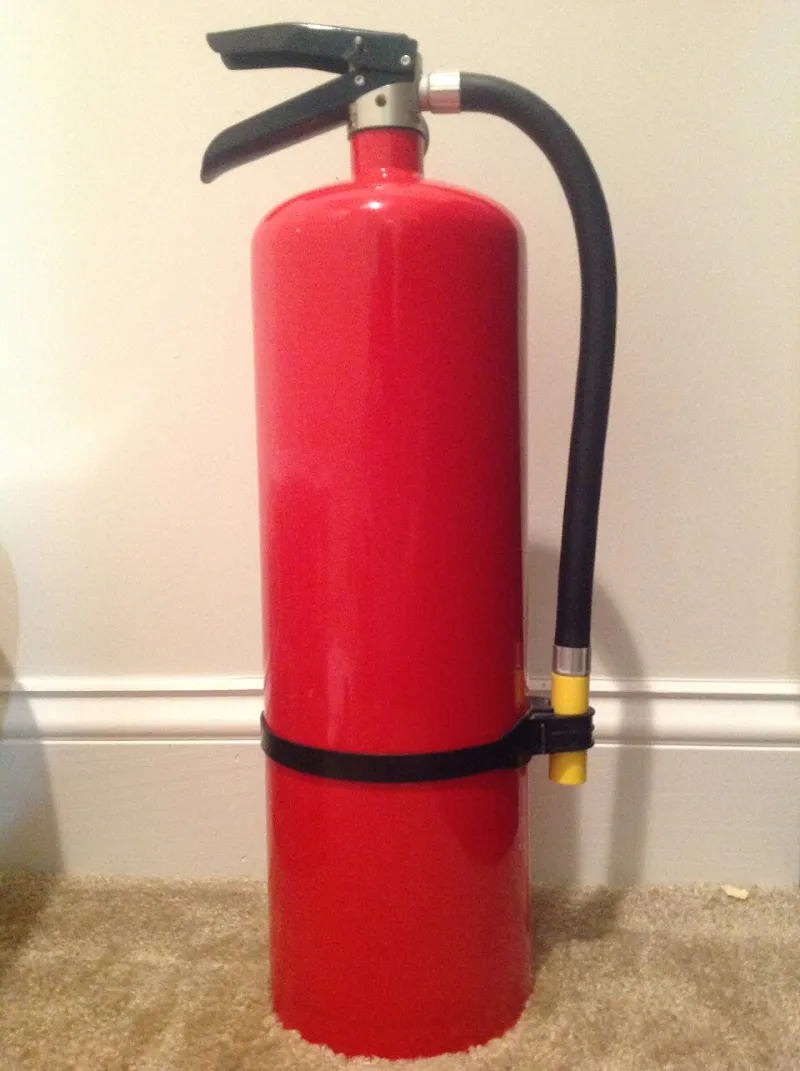
Photo: User:connortk, CC BY-SA 3.0, via Wikimedia Commons
Walk down almost any corridor in a UK office, warehouse or retail unit and you will pass a fire extinguisher without a second glance. Yet each of those red cylinders is a small legal document in its own right — its body colour, content label and plastic servicing tag all communicate something specific about your compliance position under the Regulatory Reform (Fire Safety) Order 2005. For the responsible person, learning to read them is one of the cheapest forms of risk management available.
The Language of Colour
Since 1985, British Standard EN 3 has required extinguisher bodies to be painted signal red, with content identification conveyed by a coloured band or panel covering no more than ten per cent of the surface. The scheme is simple once learned:
- Red — water, for Class A fires involving wood, paper and textiles
- Cream — foam, suitable for Class A and flammable liquid fires
- Blue — dry powder, versatile but with caveats around indoor use and visibility
- Black — carbon dioxide, for electrical equipment and flammable liquids
- Yellow — wet chemical, designed for cooking oils and fats in commercial kitchens
A quick audit of your premises should confirm that the colour coding matches the hazard in each location. A wet chemical unit in a server room, or a powder extinguisher beside a commercial fryer, suggests the original fire risk assessment has drifted out of alignment with how the building is actually used.
What the Content Label Must Tell You
Beyond the colour band, every compliant unit carries a fixed label detailing the extinguishant type, fire class ratings, capacity, operating instructions and — crucially — any limitations. CO2 units, for instance, must warn against holding the horn during discharge because of the risk of cold burns. If a label is missing, painted over or has faded beyond legibility, the extinguisher cannot be treated as compliant, however sound its condition otherwise. Replacement of the label or the unit itself is not optional.
Reading the Service Tag
The plastic tie tag is where maintenance history lives. Under BS 5306-3, extinguishers in commercial premises require basic service checks at least annually, with extended servicing (or a discharge test for CO2 units) at longer intervals. A current tag should show:
- The date of the most recent service
- The engineer's name or identifying number
- The servicing company and, ideally, BAFE or FIA accreditation details
- Confirmation of weight or pressure checks
On your walkthrough, three things should prompt a question. First, a missing tag — which may mean the unit was never serviced, or that a previous occupant's contractor removed it. Second, a handwritten or non-standard tag, which may indicate informal servicing that would not withstand insurer scrutiny. Third, a date more than twelve months old, which leaves you unable to demonstrate that maintenance is being carried out as the standards require.
When Refilling Is Not Enough
Not every fault can be corrected at the annual visit. Corrosion at the neck, a damaged or blocked hose, a failed pressure gauge, a cracked body or a unit that has been discharged and left unattended are all grounds for condemnation. Reputable engineers will red-tag a condemned extinguisher and recommend immediate replacement; a discounted sticker left on a unit that should have been withdrawn is a red flag about the contractor as much as the equipment.
What the Order Actually Requires
The Regulatory Reform (Fire Safety) Order places a duty on the responsible person to ensure fire-fighting equipment is maintained in efficient working order and good repair. It does not name the tag, the colour code or the standard — but enforcement officers, insurers and, if the worst happens, investigators will all look to BS 5306 as the benchmark. An extinguisher with no service history is, in practical terms, an extinguisher that does not exist on paper.
A Five-Point Walkthrough Checklist
- Confirm body colour and band match the hazard in each location
- Check labels are legible, intact and appropriate
- Verify every tag is present, dated within twelve months and issued by a competent provider
- Look for physical damage, corrosion, gauge deviation or signs of discharge
- Record findings — and act on any shortfall before the next inspection, not after
Fire extinguishers are the most visible element of your fire safety provision, and often the first thing an enforcing authority or loss adjuster will examine. Making sure they can tell the right story is a small task with disproportionate value.