Five Minutes at the Door: A Morning Routine That Could Save Your Compliance Record
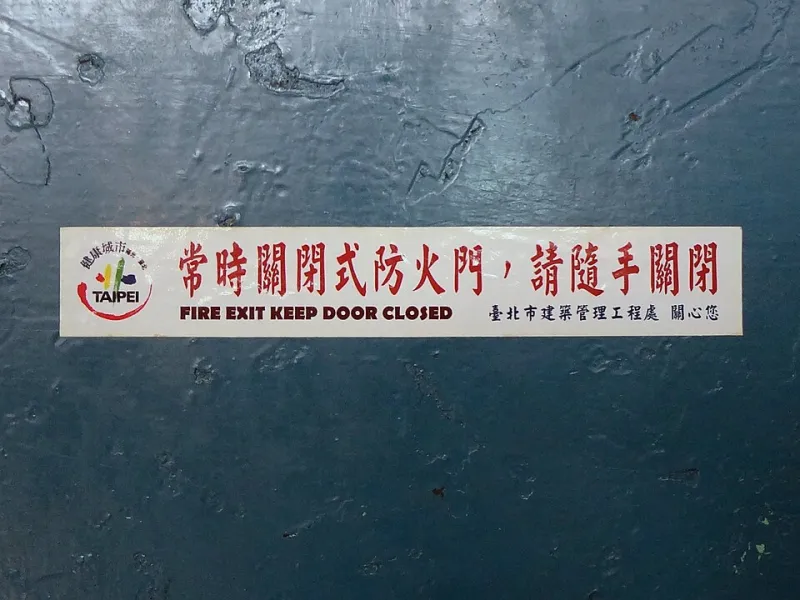
Photo: Solomon203, CC BY-SA 4.0, via Wikimedia Commons
Every morning, thousands of fire doors across UK commercial premises swing open on hinges that have quietly loosened overnight, close onto seals that were damaged weeks ago, and wedge against doorstops that nobody remembers installing. The door itself rarely complains. It simply stops doing its job.
For facilities managers, this presents an awkward paradox. Fire doors are the single most frequently inspected element of a building's passive protection — and, according to Fire and Rescue Authority audit figures, among the most commonly found deficient. A door that passes a formal six-monthly inspection can deteriorate meaningfully in the intervening weeks, and responsibility for that deterioration sits squarely with the Responsible Person under Article 17 of the Regulatory Reform (Fire Safety) Order 2005, which requires fire safety measures to be maintained in efficient working order.
The good news is that the daily check required to stay ahead of this takes less time than boiling a kettle.
Why Daily Beats Annual
Formal fire door inspections — typically conducted six-monthly or quarterly depending on building use — are essential. But they capture a snapshot. Between inspections, a building lives: trolleys strike doors, decorators remove closers to make moving furniture easier, and cleaners prop fire doors open with whatever comes to hand.
A brief daily visual sweep, performed by a member of staff who already walks the route, catches these failures while they are still trivial to fix. It also generates a habit of documentation that proves invaluable if the Fire and Rescue Service ever audits your premises, or if an insurer requests evidence of maintenance following a claim.
The Five-Minute Walkthrough
Work through the following at each fire door on your main escape routes. You do not need tools — only your eyes and hands.
1. Check the door is closed and latching. Open the door fully and let it go. It should close firmly into the frame and engage the latch without assistance. A door that hesitates, sticks, or rests short of the latch will not protect anything in a fire.
2. Look for gaps. Around the leading edge and top of the door, the gap should be consistently under 4mm — roughly a £1 coin's thickness. Gaps wider than this allow smoke, which kills far more occupants than flames, to pass through long before the door itself fails.
3. Inspect the seals. Intumescent and smoke seals should be continuous, undamaged, and firmly attached. Look for paint sealing them into the groove, missing sections, or strips that have been peeled back. A single damaged strip can compromise the whole assembly.
4. Examine the hinges. Three hinges per fire door is standard. Check for missing screws, oil staining (never lubricate fire door hinges with oil — it degrades the components), and any sign the door is dropping.
5. Confirm the closer works. Overhead closers should return the door fully without slamming. Swing the door through its arc and watch. A closer leaking fluid or moving erratically needs replacement, not adjustment.
6. Look for signage and hardware. The fire door sign should be present and legible. Handles, locks, and any vision glazing should be intact — cracked vision panels with unsealed edges are a common defect.
7. Check nothing is holding it open. Wedges, fire extinguishers, and waste bins are all routinely used to prop doors. If a door must be held open for ventilation or accessibility, it should be on an electromagnetic hold-open device connected to the fire alarm — not on a rubber wedge from a stationery cupboard.
When a Defect Becomes a Liability
Not every scuff requires immediate action. However, the legal line is crossed when a defect means the door can no longer perform its fire safety function and remains in service. A door propped open with a bin is not a maintenance issue; it is a breach of the Order. A missing closer on a corridor door protecting a final escape route is likewise not a matter to defer to the next planned servicing.
Enforcement authorities take a dim view of defects that were visible and obvious. Where an inspector finds a wedged door, the question asked is rarely whether you knew — it is why your routine allowed it. A documented daily check, even a simple signed sheet on a clipboard, demonstrates a culture of active management that insurers and regulators both reward.
Making It Stick
The most effective implementations we see are unglamorous: a laminated checklist at the security desk, a five-minute task assigned to the opening shift, and a clear escalation route to a competent contractor for anything beyond a quick fix. Photograph defects where possible; a dated image of a damaged seal attached to a maintenance request removes any ambiguity about when the fault was identified.
Fire doors fail silently, one small compromise at a time. The buildings that stay compliant are not the ones with the most expensive doors — they are the ones where somebody spent five minutes this morning, and every morning, actually looking at them.