The Slowest Person in the Building: Auditing Your Evacuation Plan Before It's Tested
Every fire evacuation plan contains an unspoken assumption: that everyone inside the building can hear the alarm, understand the instruction and leave by the nearest exit at a reasonable pace. In practice, that assumption fails regularly — and it fails the people who least deserve to be failed.
For responsible persons and facilities managers across the UK, the question is not whether their premises contain people who would struggle with a standard evacuation. It almost certainly does. The question is whether the arrangements made for those people would survive scrutiny after an incident, or an inspection.
What the Law Actually Requires
The Regulatory Reform (Fire Safety) Order 2005 places the duty squarely on the responsible person to make a suitable and sufficient fire risk assessment. What is sometimes overlooked is that the Order does not operate in isolation. The Equality Act 2010 imposes its own obligations on service providers and employers to make reasonable adjustments for disabled people — and evacuation is not exempt from that duty.
In practical terms, this means a fire strategy that works only for able-bodied occupants is not a complete fire strategy. Personal Emergency Evacuation Plans, or PEEPs, exist precisely to bridge the gap between the generic plan and the individual who cannot use it. For premises open to the public, where you cannot know in advance who will walk through the door, the concept of a Standard Operating Procedure or Generic Evacuation Plan takes its place — a documented method for assisting any visitor who requires it.
The Grenfell Tower Inquiry placed these issues under a national spotlight, and guidance such as the Fire Safety Act 2021 and subsequent amendments to the Order have sharpened expectations around evacuation for residents and occupants who need support. Inspectors and enforcing authorities are asking harder questions than they once did.
Where Evacuation Assumptions Break Down
Most evacuation failures are not dramatic. They are quiet, ordinary oversights discovered only when someone tries to use the plan.
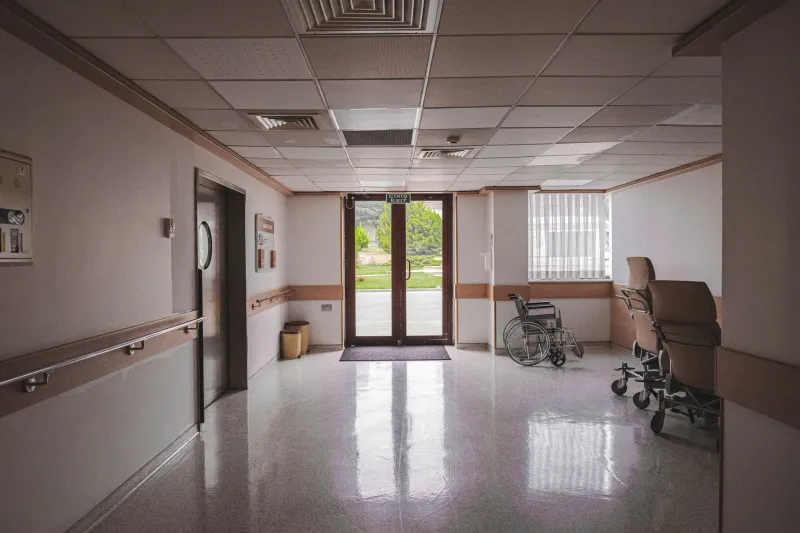
Consider the lift. Many multi-storey premises have a single lift, and it is almost certainly not a fire evacuation lift. A wheelchair user on the third floor of such a building cannot use the designated escape route at all unless the plan provides a specific alternative — refuges, evacuation chairs, trained staff, and a procedure for summoning assistance that works when the alarm sounds.
Consider refuges themselves. A refuge is not simply a landing or a lobby; it is a protected area with a means of communication back to a control point, sized appropriately, and kept clear. Too many refuges double as storage space for spare chairs.
Consider visitors. A contractor signing in at reception, a client attending a meeting, a member of the public with limited mobility — none of them will know your escape routes. If your plan relies on everyone knowing where the stairs are, it relies on an assumption your receptionist has never been briefed to question.
And consider hearing. Sounders at a frequency inaudible to some older people, or visual alarms absent from toilets and kitchens where someone might be alone, are among the most common gaps identified in assessments.
Auditing Your Own Assumptions
A useful exercise is to walk your own escape route as though you were the person with the least capacity to escape. Ask:
- Can someone with limited mobility reach a place of safety without using stairs, or is there a managed means of assisted evacuation?
- Is every refuge genuinely protected, signed, communicable and unobstructed today — not just on the day of the last inspection?
- Are evacuation chairs present, serviced, and — critically — are staff trained and confident to use them under pressure?
- Do deaf or hard-of-hearing occupants have a means of knowing an alarm has activated, wherever they are in the building?
- Is there a documented process for identifying visitors who need assistance, and for passing that information to whoever marshals the evacuation?
- Has anyone rehearsed this? A plan that has never been drilled is a hypothesis, not a procedure.
Consulting, Not Assuming
One of the most delicate aspects of this work is consultation with disabled colleagues. The instinct to avoid embarrassment — theirs or yours — often leads managers to make decisions on someone's behalf, or worse, to avoid the conversation entirely.
The correct approach is direct, respectful and individual. Ask the person what they need in an emergency; do not presume. An individual's needs may be different from what you imagined, and they are usually best placed to describe them. Document the conversation, agree the arrangements, and review them when circumstances change. A PEEP drafted without the involvement of the person it concerns is worth very little, either practically or legally.
Documentation That Withstands Scrutiny
If an incident occurs and someone is harmed, the first question an investigating authority will ask is what arrangements were in place. What matters is evidence: the risk assessment that identified the hazard, the PEEP that addressed it, the training records that show staff were competent, the drill logs that show the plan was tested, and the servicing records for any equipment relied upon.
Gaps in that paper trail are treated as gaps in the protection itself. An evacuation chair with no service history, a refuge with no communication system, a PEEP that was never reviewed — each is a finding waiting to be made.
A Plan Is a Living Document
Evacuation planning is not a one-off exercise completed alongside the fire risk assessment and then filed. People change roles. Buildings are reconfigured. A colleague's mobility may alter after an operation; a new tenant may bring new visitors. The plan should be reviewed whenever these things change, and at minimum alongside the annual assessment.
The measure of a good evacuation plan is not how it reads on paper. It is whether the slowest, newest and least familiar person in your building could get out safely — and whether you could prove, afterwards, that you thought about them in advance.
If you are uncertain whether your current arrangements would stand up to that test, a professional review of your evacuation provisions is a modest investment against a significant consequence. Mercury Fire Safety provides fire risk assessments and compliance support for commercial premises throughout the UK, including the development and review of personal emergency evacuation plans.