One Roof, Three Landlords, No Assessment: Untangling Fire Duties in Mixed-Use Premises

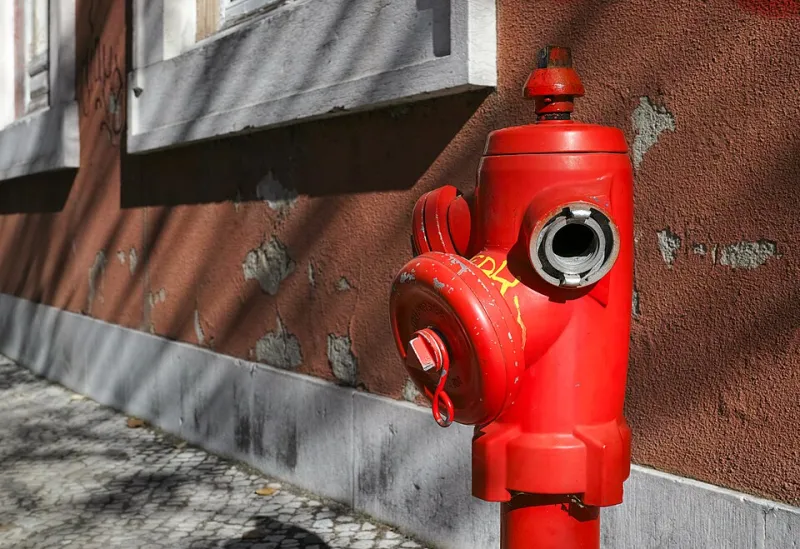
Photo: Vano111ru, CC BY 4.0, via Wikimedia Commons
Walk down almost any high street in Britain and you will pass the same building half a dozen times: a takeaway or retail unit at ground level, offices or treatment rooms on the first floor, and flats above that. Architecturally unremarkable, these mixed-use premises conceal one of the most persistent compliance problems in UK fire safety — not a shortage of law, but a shortage of anyone willing to accept that the law applies to them.
The Grey Zone Nobody Claims
Under the Regulatory Reform (Fire Safety) Order 2005, every workplace and every part of a building used for non-domestic purposes requires a fire risk assessment carried out by a responsible person. In a single-tenancy office, that duty is obvious. In a mixed-use building, it fractures.
The shopkeeper assumes the freeholder handles the staircase. The freeholder believes the letting agent's management agreement swept the common parts into someone else's remit. The managing agent, in turn, points to the lease, which obliges each tenant to maintain their own demise. Everyone is partly right — and the building's shared escape route, the very thing most likely to determine whether occupants survive a fire, ends up belonging to nobody.
Fire and rescue authorities have grown familiar with this pattern. When enforcement officers arrive following a complaint or an incident, the first hour is often spent not inspecting the premises but untangling who is legally answerable for them.
Where the Disputes Surface
The disputes tend to follow a familiar script. A landlord receives a schedule of works from the enforcing authority covering the communal stairwell and fire doors — items that sit outside any individual tenant's demise. The landlord responds that the leases place repair obligations on tenants. The tenants point out, correctly, that the Fire Safety Order binds the responsible person for the common parts, which is ordinarily the freeholder or their managing agent.
In blocks that mix commercial and residential use, the confusion deepens. Flats may fall under separate legislation concerning the building's structure and common areas, while the ground-floor commercial unit remains squarely within the Order. Where a leaseholder sublets, or where a management company has been formed to hold the freehold, responsibility can pass through several hands before it settles — if it settles at all.
The cost of getting this wrong is not theoretical. Enforcement notices, prohibition notices and, in the gravest cases, prosecution under Article 32 of the Order all follow from an unassessed common escape route. Insurers have their own view: a claim involving a fire in unassessed communal areas invites exactly the sort of scrutiny that ends with a reduced settlement or a repudiated policy.
What the Law Actually Expects
The Order does not permit shared buildings to have shared blind spots. Where two or more responsible persons exist — a landlord for the common parts, a tenant for their unit — Article 7 requires them to cooperate and coordinate. In practice, this means each party must share the findings of their own risk assessment with the others, and the assessment of shared areas must take account of risks arising from adjoining premises.
Crucially, the duty to cooperate is not satisfied by silence. A tenant who never asks about the staircase, and a landlord who never asks what the shop stores in its stockroom, have both fallen short of the statutory standard. Guidance accompanying the Order makes clear that in multi-occupied buildings, one party should ordinarily take a coordinating role — and that role must be documented, not merely assumed.
The Practical Fix: One Coordinated Assessment
Experience across hundreds of mixed-use buildings points to a single remedy: one person, clearly identified, coordinates a whole-building fire strategy, even where individual unit assessments remain separate.
In practical terms, this means:
- A written fire safety agreement, appended to every lease, naming who assesses the common parts, who services the fire detection systems, and who maintains the escape routes.
- An annual exchange of assessment summaries between all responsible persons, so that a change in one unit — new cooking facilities, a stockroom conversion, additional sleeping accommodation — is reflected in the whole-building picture.
- A single point of contact for the fire and rescue authority, so that enforcement correspondence lands with someone empowered to act rather than someone inclined to forward it.
- Joint arrangements for alarm testing, emergency lighting checks and evacuation drills that span both commercial and residential occupancies.
None of this is onerous. It is, however, deliberate — and deliberateness is precisely what the law demands. A responsible person who can produce a fire safety agreement, a coordinating assessment and a record of cooperation between parties is in a fundamentally different position from one who can only produce a lease and a shrug.
Closing the Gap Before Someone Else Does
Mixed-use buildings will always be more complicated than single-tenancy premises. The Fire Safety Order recognises that, which is why it asks for cooperation rather than perfect symmetry between parties. What it does not tolerate is the assumption that someone else has it covered.
For landlords and facilities managers, the test is simple: if the enforcing authority knocked tomorrow, could you show who assesses the shared staircase, when it was last reviewed, and how the commercial and residential risks have been considered together? If the answer depends on checking with three other parties, the grey zone has already found you.
A coordinated fire risk assessment, backed by a clear written agreement, converts ambiguity into accountability. In a building where a fire on the ground floor must be survived on the stairs, that clarity is not administrative tidiness. It is the difference between a defensible compliance record and a liability shared by everyone who assumed it belonged to someone else.