The Case That Sprinklers Keep Winning: Why Britain's Commercial Buildings Still Hesitate
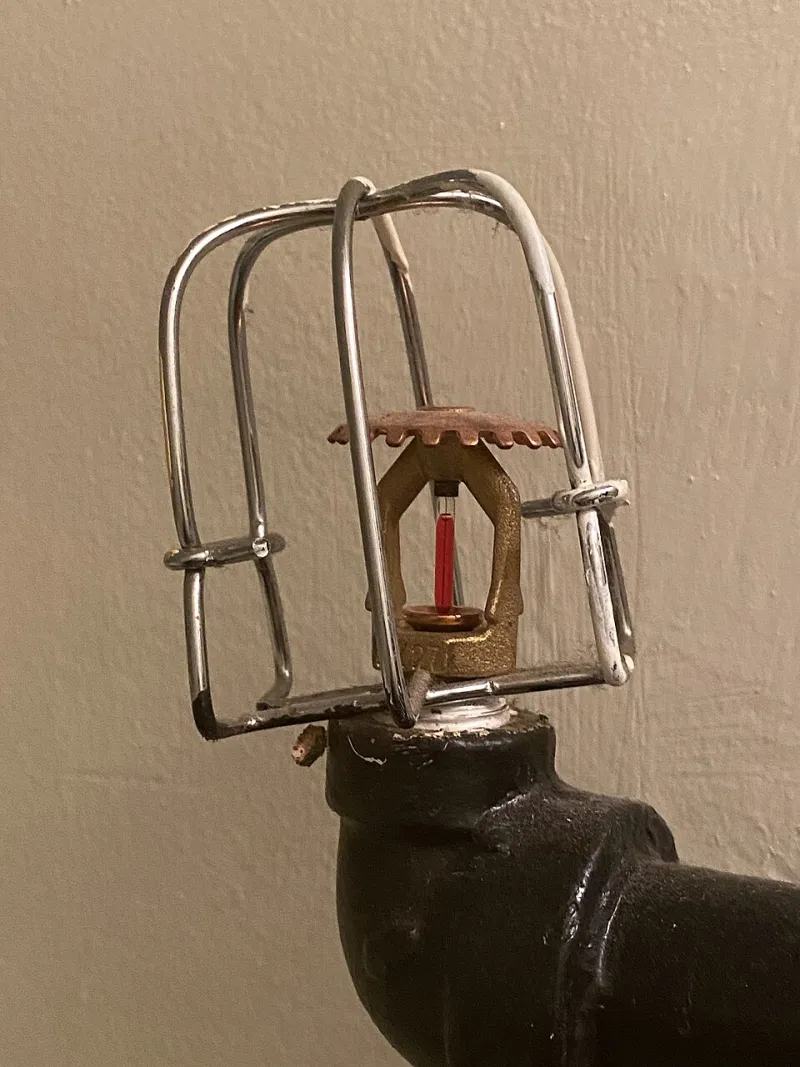
Photo: ArnoldReinhold, CC BY-SA 4.0, via Wikimedia Commons
Ask a room of facilities managers how many of their buildings are protected by sprinklers, and you will typically see a handful of hands. Ask how many of those same buildings carry fire risk assessments, extinguishers and alarm systems, and every hand goes up. That gap is not a knowledge problem. The evidence base for automatic suppression is one of the strongest in the entire fire safety field. It is a decision problem — and it is one the UK has been deferring for decades.
The Evidence Rarely Gets Argued
The statistics are stubbornly consistent. Buildings fitted with automatic suppression systems see the overwhelming majority of fires controlled or extinguished before the fire and rescue service even arrives. Fatalities in sprinklered premises are vanishingly rare compared with unsprinklered equivalents. Wales recognised this in 2011 by mandating sprinklers in all new residential buildings; Scotland has long required them for certain high-rise and care settings. England, by contrast, continues to rely on guidance thresholds — a 30-metre rule for new blocks of flats, life safety triggers in Approved Document B — that leave most low and mid-rise commercial stock outside the requirement entirely.
The result is that sprinkler provision in the UK is driven less by evidence than by regulation. Where the law is silent, most building owners stay silent too.
The Cost Objection, Unpacked
The most common objection is cost, and it deserves an honest hearing rather than a dismissive one. Retrofitting a suppression system into an occupied building is disruptive. Tanked water supplies, pump rooms and pipework runs all carry price tags that a facilities manager must justify to a board.
But the arithmetic is rarely done in full. A properly specified system typically attracts meaningful insurance premium reductions — in some sectors upwards of 20 to 30 per cent — and more importantly, it changes the shape of the risk the insurer is underwriting. Business interruption is where the real money is lost. A fire contained by a single sprinkler head activation is an inconvenience; an unsuppressed fire in a storage facility is frequently the end of the business. Insurers know this, which is why some now decline cover for high-value stock in unsprinklered premises, or impose exclusions that only become apparent at the point of claim.
There is also the matter of what sprinklers buy back. Suppression relaxes certain constraints in Approved Document B — travel distances, compartment sizes, door specifications — which can unlock floorspace or simplify refurbishment. In warehouse and logistics buildings, sprinkler protection is what allows high-bay racking at all.
Heritage, Water Damage and Other Persistent Myths
Heritage buildings are the second great refuge of the sceptic. The argument runs that pipework and sprinkler heads would ruin a listed interior, and that the water damage would be worse than the fire. Both claims have aged badly. Concealed heads, chrome finishes and slim pipework routes have been used successfully in some of the most protected buildings in the country — including National Trust properties and royal residences, where the calculus is simple: a modest intrusion now, or a catastrophic loss later. Historic England's own guidance supports sympathetic installation.
The water damage myth is equally outworn. A sprinkler head activates only in the heat plume directly above the fire. In the vast majority of incidents, a single head operates. Compare that with the several thousand litres a minute delivered by a fire and rescue service hose, applied after the fire has spread unchecked, and the supposed gentleness of doing nothing looks rather less persuasive.
What a Facilities Manager Should Ask For
For those specifying or retrofitting, the practical questions matter more than the philosophy. First, insist on design and installation to BS EN 12845 or, for lighter-duty applications, BS 9251 — and ask which standard has been used and why. Second, understand the water supply: a town main may suffice, or you may need tanks and pumps, which materially changes both cost and plant space. Third, ask about ongoing maintenance obligations — a suppression system is a life-safety asset with weekly visual checks, periodic servicing and an annual verification regime, and it must be written into your maintenance schedule and fire risk assessment from day one.
Finally, involve your insurer before you involve your contractor. A system designed to satisfy the underwriter's requirements will pay for itself faster than one designed to the bare minimum.
Scepticism Is Not a Strategy
There is a version of scepticism that is healthy — interrogating costs, questioning specifications, demanding competence from contractors. And there is a version that is simply inertia wearing a sensible expression. The evidence for automatic suppression has been tested in courtrooms, inductories and, more importantly, in actual fires, and it keeps winning. The buildings that say no are not making a case; they are postponing one. Sooner or later — usually at renewal, occasionally at three in the morning — the argument arrives anyway.