Competence on Trial: What Article 9 of the Fire Safety Order Really Demands of Responsible Persons
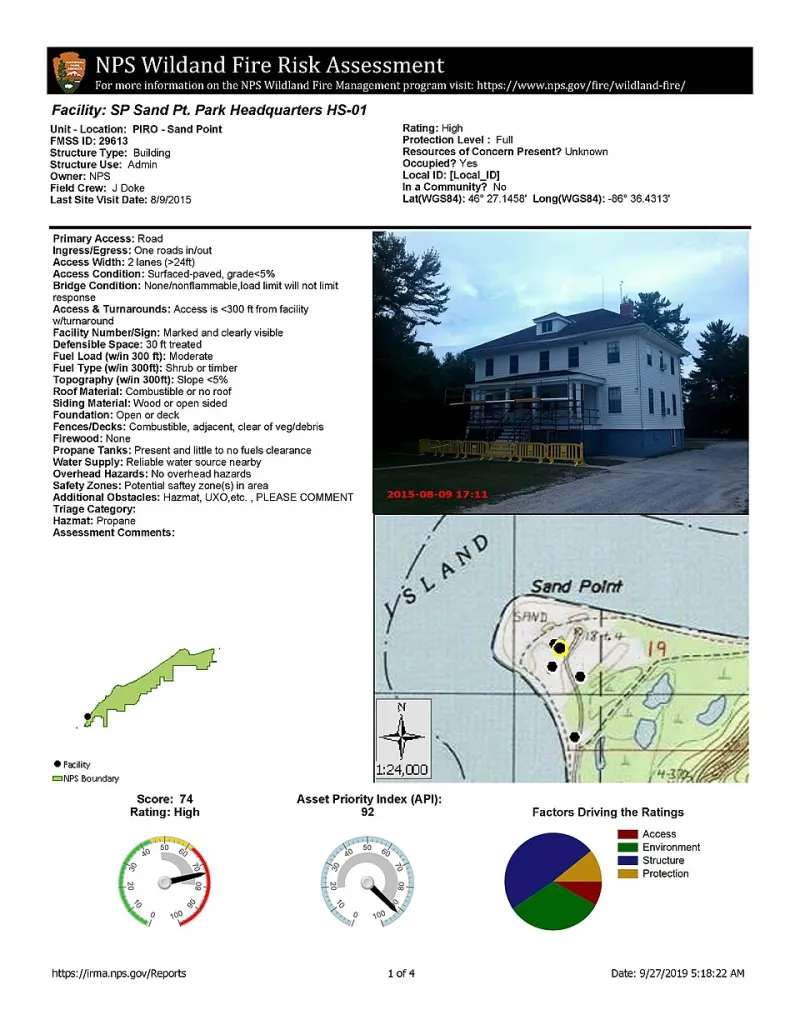
Photo: NPS, Public domain, via Wikimedia Commons
Most responsible persons can recite the broad strokes of the Regulatory Reform (Fire Safety) Order 2005 — the risk assessment, the fire precautions, the record-keeping. Far fewer can explain, with any precision, what Article 9 requires of them. That gap in understanding has become increasingly expensive since the Building Safety Act 2022 sharpened enforcement across the board.
What Article 9 Actually Says
Article 9 places two distinct duties on the responsible person. First, they must appoint one or more 'competent persons' to assist them in undertaking the preventive and protective measures required by the Order. Second — and this is the part routinely overlooked — where that competent person is not an employee, the responsible person must ensure they are informed of the relevant factors and that employees have access to information about who has been appointed.
The term 'competent person' is defined within the Order itself: someone with sufficient training, experience and knowledge, and other qualities, to enable them to properly implement the preventive and protective measures. Crucially, the legislation expects the responsible person to make a judgement about competence, not simply to assume it exists.
The Enforcement Reality
Fire and rescue authorities have grown noticeably more forensic in their approach to Article 9 since the Grenfell Inquiry and the subsequent legislative reforms. Improvement notices increasingly cite failures to evidence competence rather than just physical shortcomings in premises.
Consider the pattern seen in recent enforcement activity: a responsible person engages a contractor, files the certificate, and considers the matter closed. When an inspector later examines the arrangement, the questions are pointed. What due diligence was carried out on the contractor? Was their scope of work clearly defined? Did the responsible person satisfy themselves that the individual attending site actually held the qualifications claimed?
In one enforcement scenario that has become instructive across the sector, a facilities manager relied entirely on a third-party fire risk assessor whose report was later found to be generic and incomplete. The fire authority pursued the responsible person — not the assessor — on the basis that outsourcing the task does not outsource the duty. The notice was upheld on appeal.
Why the Building Safety Act Changed the Calculus
The Building Safety Act 2022 did not amend the Fire Safety Order's core duties directly, but it transformed the enforcement environment around them. Higher penalties, expanded powers for fire authorities, and a cultural shift towards individual accountability mean that a thin compliance file is now far riskier than it was a decade ago.
Insurers, too, have taken note. Several major UK insurers now request evidence of competence verification as part of commercial property underwriting. A policyholder who cannot demonstrate meaningful due diligence may find premiums adjusted or, in weaker cases, cover contested after a loss.
Evidencing Competence Without Outsourcing Your Judgement
There is nothing wrong with engaging external specialists — indeed, for most organisations it is essential. The error lies in treating the contract as the end of the thought process. Practical steps that stand up to scrutiny include:
- Verify credentials independently. Third-party certification schemes, professional body registration and, where relevant, membership of a recognised trade association should be checked directly rather than accepted from a CV.
- Define scope in writing. A competent person can only assist properly if the extent of their role is documented. Ambiguity here is where most arrangements fail.
- Retain a dialogue. Article 9 expects the responsible person to be informed of relevant factors. Periodic review meetings and documented communication create that evidence trail.
- Record your own reasoning. A short internal note explaining why a particular individual or firm was appointed — and why their qualifications were considered adequate — is often the single most persuasive document in an enforcement file.
The Wider Duty to Staff
It is worth remembering that Article 9 also obliges the responsible person to ensure employees are informed about who the competent persons are and how they can be contacted. This is rarely enforced in isolation, but it appears with regularity in the background of failed inspections — a small omission that colours an authority's view of an organisation's overall culture.
A Question of Ownership
Article 9 is, at its heart, a provision about ownership. The legislation does not permit a responsible person to hide behind a contractor's signature, however impressive the letterhead. Courts and fire authorities have made it clear that the duty to judge competence sits with the person who bears the legal responsibility for the premises.
For UK businesses, the practical message is straightforward: the appointment of a competent person should be treated as a managed relationship, not a transaction. Those who document their due diligence, maintain oversight, and keep the channels of information open will find Article 9 a manageable obligation. Those who treat it as a formality may discover, as several have, that the grey areas of the Order are precisely where the liability accumulates.
If you are uncertain whether your current arrangements would withstand an inspector's scrutiny, a structured review of your competence records is a sensible first step — and considerably cheaper than the alternative.