From Watchmen to Wireless: Why Seconds Still Decide Fire Outcomes
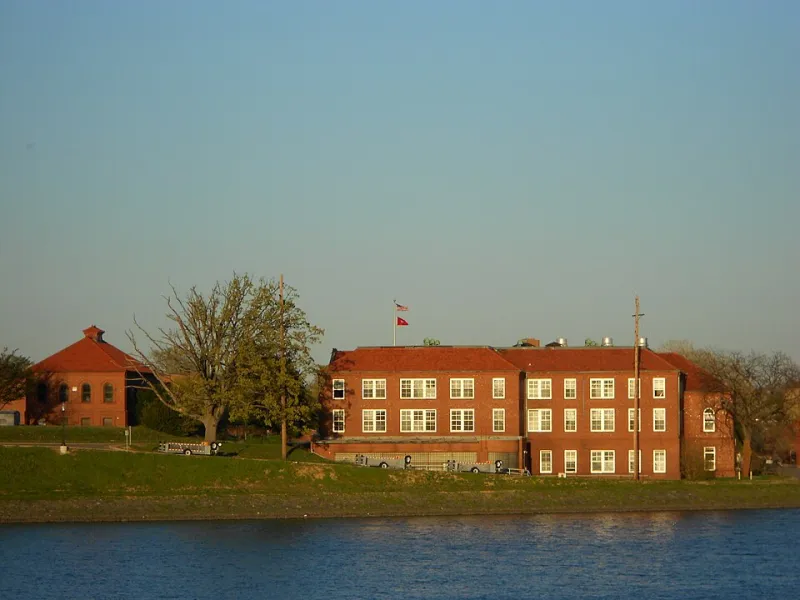
Photo: Smallbones, CC0, via Wikimedia Commons
The Romans understood something about fire that we sometimes forget beneath layers of British Standards and BS 5839 documentation: a blaze reported quickly is a blaze extinguished cheaply. Their answer was the vigiles — Rome's night watch — and, according to legend, the god Mercury himself, the swift-footed messenger whose name we carry, was the patron of exactly the thing that mattered most when flames took hold: getting word out, fast.
Centuries later, in towns and cities across Britain, the principle survived in a different form. Watchmen patrolled factory floors with lanterns. Church bells rang out coded alarms. The equipment was primitive, but the underlying logic was sound — the value of any fire safety system is measured in the time between ignition and response.
The Constant Beneath the Technology
Modern detection is, of course, unrecognisable from those early efforts. Addressable panels tell us precisely which detector has activated. Aspirating systems can sense smoke particles invisible to the human eye. Wireless infrastructure has removed the cabling constraints that once made retrofit detection prohibitively expensive in heritage buildings.
Yet the uncomfortable truth is that technology alone has not eliminated the failure modes of the past. A sophisticated panel that nobody responds to is functionally equivalent to a watchman who has fallen asleep on shift. An alarm that sounds in an empty building on an industrial estate, with no monitoring arrangement in place, may as well be a church bell ringing over an abandoned village.
In our experience auditing commercial premises across the UK, the gap is rarely in the hardware. It is in what happens in the ninety seconds after activation.
Auditing the Protocol, Not Just the Panel
When facilities managers review fire safety provision, the audit tends to focus on tangible assets: detector counts, extinguisher service dates, emergency lighting test records. All are essential. But consider what an honest audit of response would examine:
- Who receives the activation signal? If the answer is a panel in a locked comms room, you have a detection system, not a response system.
- What happens out of hours? An alarm activation at 3am on a Sunday in August requires a very different chain of communication than 10am on a Tuesday.
- How long between alert and investigation? BS 5839 allows for delays in some premises, but every second of unverified alarm time is a second of fire growth.
- Is the evacuation message clear? Two-stage alarms, voice communication and phased evacuation all depend on staff who understand the sequence — not merely the presence of sounders.
The Regulatory Reform (Fire Safety) Order 2005 places the duty on the responsible person, and fire risk assessments should interrogate these arrangements. In practice, many assessments record that an alarm system exists and move on. A rigorous assessment asks what the system is for.
The Human Messenger Still Matters
There is a temptation, as detection technology improves, to treat human response as a legacy requirement. The opposite is true. Marshals who can investigate an activation quickly and safely, staff who know not to assume a false alarm, and reception teams with a rehearsed script for contacting the fire service with accurate information — these are the modern equivalents of the watchman and the bell-ringer, and they remain decisive.
Consider the findings that so often follow serious fires in commercial premises: delayed discovery, confusion over who called the fire service, staff waiting for confirmation before acting. Rarely is the verdict that the detectors failed. More often, the message simply moved too slowly between detection and action.
A Challenge to Responsible Persons
Mercury, the swift messenger of the classical world, has become a byword for speed of communication for good reason. Our name is a reminder of the standard to hold yourself to. So here is the challenge: at your next review, audit the interval between detection and deliberate action as closely as you audit your extinguisher tags.
Time the alarm response. Walk the out-of-hours scenario. Ask the night cleaner what they would do. If the answers reveal hesitation, ambiguity or reliance on whoever happens to be in the building, you have found the weakness — and it will not appear on any equipment certificate.
The technology of fire detection has transformed beyond recognition since the era of watchmen and church bells. The physics of fire growth has not. Fire doubles in size in a matter of minutes, sometimes seconds. Speed of detection and speed of communication remain, as they have always been, the difference between an incident report and an insurance claim.
Be the swift messenger. Your premises are counting on it.