Listening Between the Bells: What Your Weekly Fire Alarm Test Is Quietly Revealing
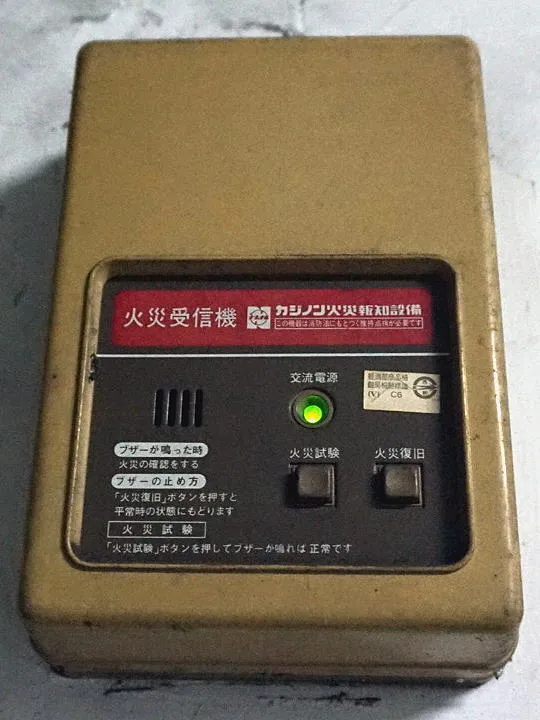
Photo: Dquai, CC BY-SA 4.0, via Wikimedia Commons
Every week, in offices, warehouses and retail parks across the UK, someone presses a call point, waits for the sounders, notes the result in a logbook and resets the panel. The exercise takes five minutes. It satisfies BS 5839-1, it keeps the insurer content, and then everyone moves on.
That, in our experience, is a missed opportunity. The weekly test is one of the richest sources of intelligence a responsible person has about the health of a fire safety system — provided you know how to listen to it.
More Than a statutory chore
British Standard BS 5839-1 requires a weekly test by the user, ideally at a consistent time so occupants learn what the alarm sounds like. Most premises comply. Far fewer interrogate the results. Yet a well-kept test record will show patterns that a service engineer visits only twice a year cannot capture: zones that drop out intermittently, batteries drifting towards the end of their serviceable life, sounders that are becoming fainter in remote parts of the building.
A single fault is noise. A repeating fault is a conversation the system is trying to have with you.
Turning the logbook into intelligence
We recommend facilities managers treat the weekly test as data collection rather than compliance. A practical approach looks like this:
- Rotate the call point. Test a different manual call point each week so every device is exercised over a rolling cycle. This is good practice in its own right, and it also builds a map of which parts of the building are behaving.
- Record the zone, device and time — not just 'pass'. A log entry reading 'Zone 2, call point 7, 09:05, full activation, reset' is worth ten entries reading 'OK'.
- Track battery and power events. Note any panel faults, however transient. A battery that generates a fault warning in three consecutive weeks is telling you it is approaching replacement, long before it fails outright.
- Note occupant response. Did staff in the far corner of the warehouse hear the sounders? Diminished audibility in one area can indicate a failing sounder, a changed layout, or new machinery masking the tone.
- Watch the trends quarterly. Sit down with three months of records and ask: which zones appear repeatedly? Is any device a serial offender? Has the frequency of minor faults increased?
This need not be elaborate. A simple spreadsheet or even a well-ruled logbook column will do. What matters is that someone reviews the pattern, not merely the individual entry.
What the patterns typically mean
Certain recurring signatures point to predictable underlying causes:
- Repeated faults on one zone often indicate cabling degradation, water ingress in a ceiling void, or a device nearing failure — common in older premises where the system has been extended piecemeal.
- Battery degradation warnings clustering in winter reflect the increased load that cold puts on standby batteries in unheated parts of a building such as loading bays and plant rooms.
- Intermittent detector faults in a single area may signal environmental issues: dust from a nearby process, steam, or even insect ingress, all of which are better addressed at source than by repeated detector replacement.
- Sounder audibility complaints after a refit — new partitions, racking, or acoustic ceiling tiles — are a prompt to revisit the original sounder coverage design, not simply to turn the volume up.
None of these observations requires technical expertise to record. They require only attention.
When recurring faults justify a full review
There comes a point where patch-and-mend is false economy. We advise clients to commission a full system review when any of the following applies:
- The same device or zone has generated faults in three or more consecutive weeks despite remedial work.
- The panel is no longer supported by its manufacturer and replacement parts are scarce.
- The building's use, layout or occupancy has changed materially since the system was designed — a common situation following the expansion of home-working zones, mezzanine offices or EV charging installations.
- Your service engineer's reports keep recommending 'further investigation' that never quite happens.
A review need not mean wholesale replacement. Often it results in targeted remediation, an updated cause-and-effect test, or a revised commissioning certificate that satisfies both the enforcing authority and your insurer.
The wider signal
There is a cultural dimension too. A building where the weekly test happens without fail, at the same time, with meaningful records, is almost always a building where the rest of the fire safety regime is in good order. Conversely, a logbook with gaps, untidy entries and no follow-up on faults usually indicates deeper neglect — and it is the kind of neglect that insurers and fire authorities are quick to notice after an incident.
The weekly test takes five minutes. Reading what it tells you might take an hour a quarter. Measured against the cost of a system failure during a genuine emergency — or an insurer declining a claim on the grounds of poor maintenance — it is among the highest-value hours in the facilities calendar.
If your records show patterns you cannot explain, or your engineer's visits never seem to resolve recurring faults, an independent review of the system is a sensible next step. The alarm has already done its part. The question is whether anyone is listening.