The Cupboard Nobody Opens: How One Overloaded Intake Reveals the Truth About UK Fire Culture
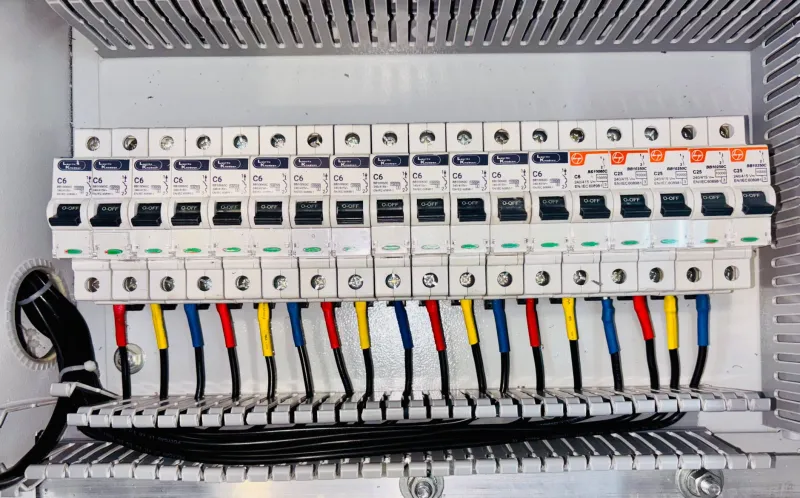
Every building has one. A door marked 'Electrical — No Unauthorised Access', locked since the contractor handed over the keys, opened perhaps twice a year and then only under duress. Step inside the typical intake cupboard on a UK commercial unit and you will find a quiet archive of deferred decisions: meter tails dressed neatly by whoever installed them a decade ago, and everything since — offcuts of cable, a flattened cardboard box, a stack of leaflets from the fire alarm engineer, a bicycle leaned against the distribution board — arranged by nobody in particular and questioned by no one at all.
We spent an hour inside one such cupboard recently, and we would argue it says more about British fire culture than any policy document. Because the mercury in the thermometer of fire risk does not leap. It rises — slowly, imperceptibly, one tolerated shortcut at a time — until the day it does not.
Fires Are Built Long Before They Begin
The popular imagination of fire is dramatic: a spark, an explosion, an alarm. The reality documented by fire investigators is far more pedestrian. Heat accumulates where ventilation was blocked. Arcing begins where insulation was abraded. Escalation happens where a fire door was wedged, a compartment was breached, or an extinguisher sat expired behind a pallet.
In the cupboard we examined, three separate risk pathways had been assembled by three separate people, none of whom thought of themselves as taking a risk. The electrician who left a spare drum of cable 'temporarily' beside the intake. The cleaner who stored a mop and bucket there because the door locked. The contractor who ran a new sub-main through a fire-stopped hole and never reinstated the seal.
Each act was minor. Together, they produced a space containing ignition sources, fuel, and a compromised escape of smoke — the full anatomy of a serious fire, assembled in instalments.
The Economics of the Small Neglect
Why does this happen in buildings that hold valid fire risk assessments and current insurance? Partly because risk assessment, as practised, gravitates towards the visible and the documentable. A broken emergency light generates a line item. A cupboard with a cardboard box in it generates nothing, because no template asks about it.
There is also the matter of ownership. The intake cupboard belongs to no one's job description. The facilities team assume the landlord's managing agent covers it; the managing agent assumes the tenant's duty holder does. In the gap between those assumptions, risk accumulates tax-free.
The Regulatory Reform (Fire Safety) Order 2005 does not recognise this gap. Article 9 requires a suitable and sufficient assessment of the premises, and 'suitable and sufficient' does not stop at the rooms with good lighting. Insurers, increasingly forensic after major losses, have reached the same conclusion: post-fire investigations routinely cite stored combustibles against electrical equipment as a contributing factor, and they will look for evidence that the risk assessment considered it.
What the Mercury Reading Tells Us
The metaphor is worth taking seriously. A thermometer's mercury rises in response to every degree of added heat, not to the final one. Fire safety culture works the same way. The building that suffers the catastrophic fire is rarely the one that made one catastrophic mistake; it is the one that made a hundred reasonable ones.
This is why we counsel clients to judge their fire safety not by their paperwork but by their least-visited room. If the intake cupboard is orderly, the riser is clear and the plant room smells of machine oil rather than cardboard, the culture beneath the compliance is probably sound. If not, the assessment sitting in the office is describing a building that no longer exists.
A Checklist for the Rooms Nobody Opens
We suggest a quarterly walk of the spaces that never appear on tours. Take nothing for granted and check:
- Combustible storage: no packaging, paper, or spare materials within at least one metre of electrical intake equipment, distribution boards, or meters.
- Thermal damage: any smell of overheating, discolouration around terminations, or buzzing from boards warrants an immediate electrician's visit.
- Compartmentation: holes through walls or floors for cables or pipework should be sealed with appropriate fire-stopping — not foam from a can applied by whoever was passing.
- Access and egress: the door should open freely, close fully, and lock; nothing should be stored in the escape route outside it.
- Housekeeping history: photograph the space each quarter. Change between photographs is the most honest risk indicator you will find.
- Ownership: record in writing who is responsible for the space. If nobody's name is attached, the risk is unmanaged by definition.
Culture Is What Happens When Nobody Is Watching
The Responsible Person under the Fire Safety Order cannot personally inspect every cupboard. What they can do is build a culture in which the person who notices a cardboard box by a distribution board feels obliged — and empowered — to move it and report it. That instinct, repeated across a portfolio, is what actually holds the mercury down.
The alternative is the building we described at the start: compliant on paper, combustible in practice, waiting for the day the thermometer finally breaks.